
A Symposium
In celebration of Alicia Gaspar de Alba’s 2026 Retirement and Lifelong Research on Sor Juana Inés de la Cruz
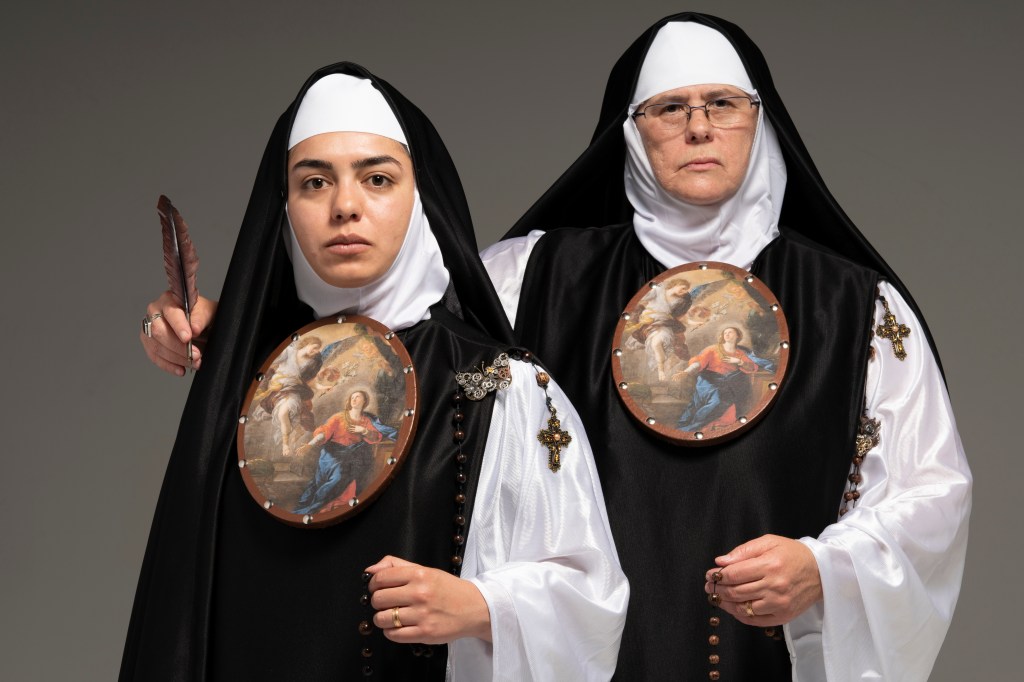
(models: Alicia Gaspar de Alba as the Elder, and Alicia Billalobos, UCLA Chicana/o Studies alumna, as the Younger)
February 26, 2026, 9:00am – 7:00pm
Event will be live-streamed, courtesy of the UCLA School of Music. Click on the link when the program begins. https://schoolofmusic.ucla.edu/school-of-music-live-streams/#other
Northwest Campus Auditorium, UCLA
PRE-REGISTRATION IS NOW CLOSED. WALK-INS WELCOME!
DESCRIPTION
“It is not seemly to call me a woman, as I will never be a woman, who as woman will serve a man.” — Sor Juana Inés de la Cruz
Hosted by the UCLA Center for Musical Humanities in partnership with the Dean of Social Sciences and the César E. Chávez Department of Chicana/o and Central American Studies, “Queering Sor Juana” will include two panels and a showcase performance of arias from the opera JUANA, which is based on Gaspar de Alba’s historical novel, Sor Juana’s Second Dream. The opera premiered with Opera UCLA in 2019, with two sold-out performances and a glowing review in The Los Angeles Times.
The symposium is free and open to the public, but all attendees must register online. Lunch and reception will be provided for the participants and first 50 registered guests only. Register here.
“Otro Corazón 3: Queering Sor Juana” builds on past symposia organized by Alicia Gaspar de Alba in her “Corazón” series,1 and is offered as part of a year-long celebration of her 32-year academic career at UCLA, focusing on her lifetime of research and creative engagement with Sor Juana Inés de la Cruz, the 17th-century Mexican nun/poet/scholar who is hailed all over the world as the “first feminist of the Americas” and the Mexican “Tenth Muse.”
About Sor Juana Inés de la Cruz (1648-1695)
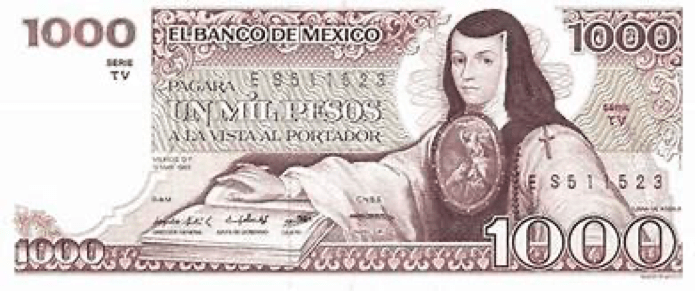
A child prodigy who learned to read at age three, had her first poem published at eight, and won a tournament of minds against forty scholars from the University of Mexico at eighteen, Juana Inés de Asbaje y Ramírez de Santillana, aka, Sor Juana, was a famous and controversial figure in her own time. At 19, she joined the Order of Saint Jerome and became a cloistered nun in the Convent of Santa Paula (now the University of the Cloister of Sor Juana) until her death at 47 years of age. She stands alongside the Virgin of Guadalupe and Frida Kahlo as the female trinity of Mexican cultural icons.
Sor Juana’s image has graced Mexican currency since the late 1980s, and she is recognized as one of the main literary figures of the Spanish Golden Age. In the 1920s, the first Sorjuanista, a Latin Americanist scholar and suffragist named Dorothy Schons at the University of Texas, baptized Sor Juana as the “first feminist” of the Americas, Because of the sublimity of her verse, most especially the love poetry she wrote to other women, she was given, in her lifetime, the title “la décima musa,” or the “Tenth Muse,” which refers to her excellence in the décima form of poetry, but is also an allusion to the Greek lesbian poet, Sappho, who was also called the “the tenth muse” by Plato in the seventh century BCE. She left behind four thick volumes of her collected works, including plays, poetry, and prose. Of these, her most famous pieces are “Hombres necios,” a satirical poem about male double standards, her “Respuesta a Sor Filotea,” considered to be her intellectual autobiography, and a very long and intricate poem about her inner battle between reason and passion, “Primero Sueño,” or “First Dream.”
Sor Juana is legendary today for her passionate defense of a woman’s right to be a scholar and to publish her work. In her 27 years as a cloistered nun, Sor Juana was relentlessly persecuted for her genius and her defiance of the Catholic Church’s dictates regarding the female sex. Because she refused to abide by these limitations, and because she had the support and backing of the Viceregal court and influential nobles in Europe and Mexico, Juana’s celebrity flourished in her own lifetime, and she saw two volumes of her collected works published in Spain. In 1694, to mark her 25th anniversary as a “bride of Christ,” Sor Juana renounced her scholarly life, her extensive library, and her correspondence with the world and renewed her vows to the Hieronymite order in a document she signed in her own blood, calling herself “la peor de todas” (the worst of all women/the worst of all nuns). She died a year later, in 1695, while caring for her fellow nuns during an epidemic. What happened to this most accomplished and rebellious of colonial women, this most enlightened mind of the Spanish Golden Age? Why did she forsake everything that had given meaning to her cloistered life? Read Sor Juana’s Second Dream.
About “La Profe”
Originally from the El Paso/Juárez border, Alicia considers herself a rebel with a cause and has spent her dual careers as writer and professor advocating for “bad women,” i.e., women who refuse the constraints imposed on their sex, gender, bodies, and identities, and have been persecuted across place, time, and culture for their transgressions. Years before she even began her PhD coursework, Gaspar de Alba, or “La Profe” as she is known by her students, was already deeply immersed in researching Sor Juana’s life, relationships, and publications. Her ten-year research project into Sor Juana culminated in the novel, Sor Juana’s Second Dream, published by University of New Mexico Press inn 1999, and translated into Spanish and German. The novel was subsequently adapted to a theater play (“The Nun and the Countess”), an opera (“Juana”), and a forthcoming film (“Juana de Asbaje”).
The research Gaspar de Alba did for her novel could have earned her a PhD in itself, but instead she went on to complete a PhD in American Studies from the University of New Mexico, specializing in Chicano/a art, popular culture, Chicana feminisms, and sexuality studies. Her dissertation, “Mi Casa [No] Es Su Casa: The Cultural Politics of the Chicano Art: Resistance and Affirmation Exhibition,” was awarded the Ralph Henry Gabriel Prize for Best Dissertation in American Studies by the American Studies Association. That same year, her first collection of short fiction, The Mystery of Survival and Other Stories, won the inaugural Rudolfo and Patricia Anaya Premio Aztlán for Emerging Chicano/a Writers. These two awards set the stage for a career that was to be divided between her academic scholarly pursuits and her creative works.
Hired at UCLA in 1994 (the same year she filed her dissertation) as a founding faculty member of the Cesar Chavez Department of Chicana/o Studies (renamed a few years ago to Chicana/o and Central American Studies), with joint appointments in the English and Gender Studies Departments, Gaspar de Alba was instrumental in bringing an interdisciplinary, cultural studies, feminist, queer, and fronteriza sensibility to the new Chicana/o Studies program that resulted from the 1993 Hunger Strike at UCLA. For 32 years as a Professor of Chicana/o (and now Central American Studies), she has taught courses on border consciousness, Chicana lesbian literature, the Juárez femicides, Sor Juana Inés de la Cruz, Chicana feminist theory, barrio popular culture, bilingual creative writing, oral storytelling, and mysteries with a mission. She published her first monograph, Chicano Art Inside/Outside the Master’s House, in 1998, and her first novel, Sor Juana’s Second Dream, in 1999, and earned early tenure at UCLA in 1999. From 2001-2002, she served as Interim Director of LGBT Studies, Associate Director of the Chicano Studies Research Center from 2002-2004, and advanced to Full Professor in 2005. She Chaired the Cesar Chavez Department from 2007-2010, and the LGBTQ Studies Program from 2013-2019. She has been a member of the LGBTQ Studies Faculty Advisory Board since its inception in 1997.
Alicia has published 13 books, among them academic texts and anthologies, award-winning novels, and collections of poetry and short fiction. Her most recent academic book, [Un]Framing the “Bad Woman”: Sor Juana, Malinche, Coyolxauhqui and Other Rebels with a Cause (2014) was awarded the Best Book Award from the American Association of Hispanics in Higher Education, which showcases her research into Sor Juana and other Mexican and Chicana archetypes of feminist resistance to patriarchy.
To see Gaspar de Alba’s other books, please refer to her website: https://aliciagaspardealba.net
In 2026, she was awarded the prestigious International award, Galardón Don Luis Leal by HispaUSA, the association of Chicana/o and Latina/o Studies in Spain. “La Profe” will be retiring from UCLA in Fall 2026, and is looking forward to moving to New Mexico with her family–her wife Alma Lopez and their daughter Azul– sleeping more than four hours per night, and working on her many unfinished novels.
OTRO CORAZON 3: QUEERING SOR JUANA
SYMPOSIUM PROGRAM
VENUE: NORTHWEST CAMPUS AUDITORIUM, 350 De Neve Dr., UCLA
9am: Registration in the Lobby
9:30: Welcome and Introductory Remarks by Professor Raymond Knapp and Dean Abel Valenzuela
10:30-12 noon: Panel 1. La Décima Musa: Classic Sor Juana
Speaker: Cesar Favila, Professor of Musicology, UCLA
Speaker: Deena J. González, Retired Professor and Administrator
Speaker: Emilie Bergman, Professor Emerita, UC Berkeley
Moderator: Alicia Lopez (UCLA Chicana/o and Central American Studies graduate student)
12-1pm: Boxed Lunch
1:30-3pm: Panel 2. “La Peor de Todas”: Sapphic Sor Juana
Speaker: Emma Perez, Professor Emerita, University of Arizona
Speaker: Alma López, Independent Artist and Chicana/o & Central American Studies Lecturer, UCLA
Speaker: Carla Lucero, Independent Opera Composer, Bay Area
Moderator: Ariel Hernandez (UCLA Chicana/o and Central American Studies graduate student)
Coffee Break in the Lobby
4-5:15pm: Performances and Q&A
4 Arias from “JUANA”2 – A Spanish-language chamber opera based on the historical novel, Sor Juana’s Second Dream3 by Alicia Gaspar de Alba. Music by Carla Lucero.
Libretto by Carla Lucero and Alicia Gaspar de Alba
Costumes and costume display by Alexa Behm
Showcase Program
- “Hombres necios” performed by Meagan Martin and Maria Valdes-Gomez (Soprano) as la Condesa
- “Fili”, performed by Meagan Martin (Mezzo-Soprano) as Sor Juana
- “Sin vos” (abbreviated version) performed by Maria Valdes-Gomez
- “Amor eterno” performed by Meagan Martin and Maria Valdes-Gomez
- Accompanied by pianist, Peter Walsh
- Screening of “Sin Vos” video (opera on film, recorded at the Ebell of Los Angeles, sung by Michelle Allie Drever as la Condesa. María Dominique Lopez portrays Sor Juana. Film created by Carson Gilmore of Vox Visceralis. Music recorded in Prague with BNO Chamber Orchestra through PARMA Recordings and is available on Navona Records)
Q&A: Carla Lucero and Alicia Gaspar de Alba, moderated by Dr. Kency Cornejo
Closing Remarks: “Mis Cinco Corazones” by Alicia Gaspar de Alba
6pm: Reception in the Lobby
Symposium Participants
Emilie Bergmann is Professor Emerita of Spanish at the University of California, Berkeley, with publications on gender, the maternal, and queer sexualities in early modern Hispanic culture; and on relationships among poetics, visual perception, and sound studies. She is co-editor, with Stacey Schlau, of the Routledge Research Companion to the Works of Sor Juana Inés de la Cruz (2017) and the MLA Approaches to Teaching the Works of Sor Juana Inés de la Cruz.
Cesar Favila’s work resides at the intersections of music, religion, and art in the Ibero-American world. He is currently a fellow at the Yale Institute of Sacred Music in New Haven, CT and associate professor of musicology at the UCLA Herb Alpert School of Music. He is the author of the multi-award winning book Immaculate Sounds: The Musical Lives of Nuns in New Spain, available open access with Oxford University Press.
Deena González is interested in the social histories of invisible figures and in the creation of a sub-field of Chicano/a/x Studies, that is, Chicana history. She is the author of Refusing the Favor: The Spanish-Mexican Women of Santa Fe, 1820-1880, and has also published over 50 articles, book chapters, and essays, and co-edited the massive Oxford Encyclopedia of Latinos in the United States. Her main areas of research include race, class, gender, and sexuality, and her academic career has spanned four decades, from Pomona College to Loyola Marymount University to Gonzaga University, where she served as Provost from 2019-2021. She retired in 2024, and moved back to New Mexico, where she is working on a novel, growing a kitchen garden, and renovating the 1935 family farmhouse built by her paternal grandfather and local architects. She lives in Albuquerque.
Alma Lopez is a Mexican-born queer Chicana visual artist based in Los Angeles whose work has been exhibited nationally and internationally; her work can be found in the collections of the LA County Museum, the Oakland Museum, the Museum of International Folk Art in Santa Fe, NM, and the Smithsonian American Art Museum (among others). She is the co-editor (along with her spouse, Alicia Gaspar de Alba) of Our Lady of Controversy: Alma Lopez’s “Irreverent Apparition” (2011), and her art is currently on display at the Chicano Camera Culture: A Photographic History, 1966-2026 exhibition at the Cheech Marin Center for Chicano Art and Culture in Riverside, CA through September 6, 2026. She teaches in the Cesar Chavez Department of Chicana/o and Central American Studies and LGBTQ Studies Program at UCLA.
Carla Lucero, Composer/Co-Librettist, originally from Los Angeles, Bay Area Composer and Librettist, Carla Lucero, studied composition at California Institute of the Arts (CalArts). Her work challenges gender, racial, LGBTQ+, cultural and disability stereotypes. Among her operas are WUORNOS (2001 Yerba Buena Center for the Arts, San Francisco); Juana (with Co-Librettist, Alicia Gaspar de Alba, 2019 Opera UCLA and 2023 dell’Arte Opera Ensemble, New York); Las tres mujeres de Jerusalén (2023 and 2025 LA Opera, Los Angeles); The Everywhere of Her (with Librettist, Velina Hasu Houston, 2023, 2024 and 2026 The Ebell of Los Angeles); Touch (with Co-Librettist, Marianna Mott Newirth, 2024 Opera Birmingham, AL); ¡Chicanísima! (2024 Quinteto Latino, San Francisco; 2025-2026 Escenia Ensamble – Mérida, Valladolid and Morelia, México – and 2026 Opera Cultura, San Jose, CA); and Hello, Star (with Librettist, Jarrod Lee, 2025 Opera Parallèle, San Francisco and 2026 Peabody Institute at Johns Hopkins University, Baltimore); as well as two in development: TEA (with Librettist, Velina Hasu Houston, 2027 Hawaii Opera Theatre, Honolulu) and Muriel & Anita (2027 Mercury Theater, Petaluma, CA). Lucero has been awarded four OPERA America grants for the commissioning and presentation of her operas throughout the country, and generous support from the Creative Work Fund, Horizons Foundation, Meet the Composer, InterMusic SF, New York Community Trust, UCLA, California Arts Council, American Chamber Music Society and other distinguished institutions, esteemed foundations and wonderful individual donors. In 2025 she was honored by the City of San Francisco and Bay Times Newspaper as one of the 2025 SF Bay Area Latine LGBTQ+ Leaders for artistic excellence and her contributions to social justice through her art and practice.
Emma Perez is Research Social Scientist, Emeritus, at University of Arizona’s Southwest Center and formerly Professor in the Department of Gender and Women’s Studies. Pérez has published fiction, essays, and the history monograph, The Decolonial Imaginary: Writing Chicanas into History (1999). Her first novel, Gulf Dreams (1996), is considered one of the first Chicanx queer/lesbian novels in print. Her second novel, Forgetting the Alamo, Or, Blood Memory (2009) earned awards including the Isherwood Writing Grant (2009) and the National Association for Chicana/ Chicano Studies Regional Book Award. Previously published essays and poems are in a collection titled Queering the Border (2023) published with Arte Público Press. Her latest novel, Testimony of a Shifter (2023), also published with Arte Público Press, was favorably reviewed in Booklist: “For fans of Ursula K Le Guin and Margaret Atwood, Testimony of a Shifter is the queer, feminist dystopian novel readers have been searching for.” Pérez was born in El Campo, Texas and lives in Tucson, Arizona.
Moderators
Dr. Kency Cornejo is Associate Professor in the Department of Chicana/o & Central American Studies at the University of California, Los Angeles (UCLA). Her research and teaching specializations include art and visual culture of Central America and its diasporas, creative expressions within anti-colonial and anti-racist social movements, and decolonial aesthetics and methodologies in art. She is author of the award-winning book, Visual Disobedience: Art and Decoloniality in Central America (Duke University Press, Oct 2024), which features forty artists and over eighty artworks from the postwar region. Her work has been supported by the Fulbright and Ford Foundations, an Andy Warhol Foundation Arts Writers Grant, and a National Endowment for the Humanities Faculty Award Grant. She was born to Salvadoran immigrants and raised in Compton, CA.
Ariel Hernandez (they/she) is a 2nd year PhD Student in Chicana/o and Central American Studies at the University of California, Los Angeles. They received their BA and MA in History from California State University, Los Angeles. Ariel’s research is centered on the artwork of their mother, Judithe Hernández, one of the earliest Chicana artists during the Chicano Art Movement. Currently, Ariel is working on critically examining Hernández’s art from 1980-1983 as it relates to the U.S.-Mexico borderlands, gender, and the female body within depictions of interior, liminal, and exterior spaces.
Alicia Inés Lopez (she/her/hers) is a fourth-year doctoral student in the César E. Chávez Department of Chicana/o & Central American Studies. She is a mother to two girls, Aliah and Arielle, whose lives, and ways of seeing the world continue to shape both her scholarship and her sense of purpose. Her research centers on the intersections of gender, race and ethnicity, and labor, with particular attention to how culture operates as a mechanism that invisibilizes Latina labor. Grounded in community, memory, and relational knowledge, her scholarship seeks to make visible the emotional, cultural, and embodied dimensions of Latina labor, while honoring the women whose work sustains families, histories, and futures.
Perfomers
Meagan Martin (mezzo soprano) Recognized for her “fine coloratura technique” (Opera) and “keen sense of drama” (Triangle Guitar Society News), Meagan Martin appears this season with LA Opera Connects, The Da Camera Society, Opera Laguna, and more. Recent highlights include singing the alto solos in Pergolesi’s Stabat Mater under the baton of James Conlon and portraying Rosina in Il barbiere di Siviglia at The Ford with Pacific Opera Project. Enthusiastic about new music, Meagan created the title role in the world premiere of Lucero and Gaspar de Alba’s Juana; commissioned and premiered two song cycles inspired by Jane Austen heroines (Aferdian/Martin Koch); and appears on the album Viajeros singing Rosa Divina, a song cycle by composer Giovanni Piacentini with texts by Sor Juana Inés de la Cruz, alongside Grammy-nominated guitarist Mak Grgić. She holds master’s and doctoral degrees from UCLA’s Herb Alpert School of Music, where she studied with baritone Vladimir Chernov and director Peter Kazaras.
Maria Valdes (soprano) has been praised by The New York Times as a “first-rate singing actress,” acclaimed for her interpretations of Mozart, leading operatic heroines, and a wide-ranging concert repertoire. In the 2025–2026 season, she returns to Symphony San Jose for Vaughan Williams’ Dona Nobis Pacem, Spanish River Concerts for Broadway to Opera, and The Metropolitan Opera to cover Frida Image #1 in El Último Sueño de Frida y Diego. She also performs Barber’s Knoxville: Summer of 1915 with the Valdosta Symphony and Bellingham Festival of Music, marking her sixth appearance in the work, and sings Terre Johnson’s Te Deum with MidAmerica Productions. Recent highlights include Beethoven’s Symphony No. 9 with Hawaii Symphony Orchestra, Donna Elvira in Don Giovanni with Opera Wilmington, and frequent appearances with Hawaii Opera Theatre. Ms. Valdes joined the Metropolitan Opera roster in 2023 and is a former Adler Fellow of San Francisco Opera.
Peter Walsh (Music Director, Pianist) is currently a member of LA Opera’s full-time music staff where he works as a pianist, coach, and prompter in addition to coaching the company’s Domingo-Colburn-Stein Young Artists. He has played for more than 50 productions at LA Opera, San Francisco Opera, Houston Grand Opera, San Diego Opera, Opera Omaha, Utah Opera, Central City Opera, and Wolf Trap Opera. Walsh has performed in recitals at Carnegie Hall, Ravinia, the Broad Stage, Sundays Live at LACMA, and Vocal Arts DC. He has performed with the Los Angeles Chamber Orchestra, LA Opera Orchestra, Los Angeles Master Chorale, San Francisco Opera Orchestra, Houston Grand Opera Orchestra, and the San Diego Symphony. In 2023, Walsh released Songs of Dominick Argento with Lexicon Classics, a debut album with mezzo-soprano Abi Levis. He holds bachelor’s, master’s, and doctoral degrees in piano performance from the USC Thornton School of Music.
Creative Team
Alexa Behm, Costume Designer, is excited to re-join the Juana team, after costume designing the original production in 2019. As a proud member of USA 829, Alexa’s professional collaborations have included, but are not limited to, The Children’s Theatre (Minneapolis), Alabama Shakespeare Festival, LA Opera, American Contemporary Ballet, Studio Tenn, Opera Birmingham, Music Theatre Works Chicago, The Writer’s Theatre, and Marriot Lincolnshire. Alexa has freelanced as a Local 705 costumer for episodic television and film. Her credits include Fatal Attraction (Paramount+), The Offer (Paramount+), American Horror Stories (Hulu), and Don’t Worry Darling(New Line). Alexa earned her MFA in Design for Theatre, Film, and Digital Media at UCLA. She now works concurrently as a costume designer and mentor in theatre education, holding the Assistant Professor of Costume Design position at UC, Santa Barbara.
Michelle Magaldi, Producer, a proud alumna of UCLA’s School of Theatre, Film, & Television, where she earned her Bachelor of Arts in Theater, Michelle Magaldi currently serves as Production Direction at LA Opera, where she leads multidisciplinary teams in mounting mainstage, site-specific, broadcast, and digital programming. In addition to her work with La Opera, Michelle is Producer for Opera UCLA at the Herb Alpert School of Music, where she fosters partnerships with artists, donors, and community stakeholders to bring high-quality productions to the stage.
Sara Widzer, Stage Director/Intimacy DirectorSara E. Widzer’s work in opera and theatre as a stage director, intimacy director and performance coach seeks uplift the human experience, build bridges between communities and create brave spaces that center care and agency inspiring challenging conversations where change can take root. For the 2025-26 season, Sara joins the 10th anniversary national tour of Fellow Travelersas intimacy director and associate director and continues her work as intimacy director at LA Opera on West Side Story, La bohème, and upcoming Falstaff. As a consent forward theatre artist, Sara E. Widzer is dedicated to telling stories that meet at the intersection of social justice and artistic innovation. She is a certified intimacy director and the intimacy direction and consent consultant for LA Opera. Sara directed the 2019 world premiere of JUANA and is very excited to be returning to this beautiful telling of Sor Juana’s story.
Co-Sponsors
Impresario ($5,000+)
- UCLA College, Dean of Social Sciences Division
- UCLA César E. Chávez Department of Chicana/o and Central American Studies
- UCLA Center for Musical Humanities
Divo/Diva ($2,500+)
- UCLA Department of Musicology (Robert Stevenson Funds)
Aficionadxs ($1000+)
- UCLA College, Dean of Humanities Division
- UCLA Center for 17th & 18th Century Studies
The Chorus Line ($500+)
- UCLA Center for the Study of Women/Barbara Streisand Center
- UCLA Department of Spanish & Portuguese
The Spotlight Society ($250+)
- UCLA Gender Studies Department
- UCLA LGBTQ Studies Program
- UCLA Comparative Literature Department
- UCLA Chicano Studies Research Center
FOR MORE INFORMATION: contact our project assistant, Dr. Gabriela Rodriguez-Gomez, grgomez@ucla.edu.
Acknowledgment
UCLA acknowledges the Gabrielino/Tongva peoples as the traditional land caretakers of Tovaangar (the Los Angeles basin and So. Channel Islands). As a land grant institution, we pay our respects to the Honuukvetam (Ancestors), ‘Ahiihirom (Elders) and ‘Eyoohiinkem (our relatives/relations) past, present and emerging.
PARKING
Self-service parking is available for the Northwest Campus Auditorium in Lot SV. Costs range from $5 for 1 hour to $17 for all day. Evening rates (after 4 p.m.) are $3-$6 for 1 to 2 hours and $12 for all night. Please verify all rates with campus parking, as they are subject to change. Learn more about campus parking.
For attendees who have a yellow permit, follow this link for instructions on how to cross-park.
NOTES
- Previous Corazón-themed symposia have included Otro Corazon 2: Queering Chicanidad in the Arts: A Valentine to Tomás Ybarra Frausto (2017); Sex y Corazón: Queer and Feminist Theory at the Vanguard of the New Chicana/o Studies (2010); Otro Corazón: Queering the Art of Aztlán (2001); and Puro Corazón: A Symposium of Chicana Art (1995). In Fall 2019, as a prequel to the world premier of JUANA with Opera UCLA, Gaspar de Alba organized “You Imagine Me, and I Exist: The Afterlives of Sor Juana Inés de la Cruz. ↩︎
- “JUANA” had its East Coast premiere in August 2022 with the Delle’Arte Opera Ensemble in New York City. ↩︎
- Sor Juana’s Second Dream (1999) explores Sor Juana’s life as a 17th-century woman writer and proto-feminist nun, integrating excerpts from Sor Juana’s own writings and imaginary letters and journal entries into the historical fiction. The novel was awarded the Latino Hall of Fame Award for Best Historical Novel in 2000. ↩︎
 Alicia Gaspar de Alba, Ph.D.